
A countertop slab is cut to within a fraction of an inch, and it only fits if the cabinets under it are level and the template is right. Most countertop problems, like wide seams, cracks near the sink, or a top that rocks, trace back to the steps before install day. Kitchen countertop installation goes well when the cabinets, template, and support are all done right.
We coordinate the whole process: cabinets set and leveled, the template made, the slab cut, and the plumber ready to hook up the sink.
Countertops are one of several services we offer as a kitchen remodeler, often paired with new cabinets.
Here is how kitchen countertop installation works, how the materials compare, what support each one needs, and what it costs.
How Countertops Get Installed
Every stone kitchen countertop installation follows the same order, and the timing depends on the material.
- Set the cabinets. Base cabinets must be installed, level, and screwed down first.
- Make the template. The fabricator traces the exact shape, including the sink and cooktop.
- Cut the slab. Fabrication usually takes about 10 to 14 days for in-stock material.
- Install the tops. Install day takes about three to six hours for a typical kitchen.
- Hook up the sink. The plumber can usually reconnect the sink and faucet the same afternoon.
Seams can take light pressure within an hour, but keep heavy items off them for about 24 hours. Silicone along the backsplash needs a day or two to cure.
Comparing Countertop Materials
The material you pick changes the cost, the look, and how a kitchen countertop installation is done. Typical national material prices per square foot are:
- Laminate: about $15 to $60. Lowest cost and fastest install.
- Solid surface: about $40 to $100. Seamless look and repairable scratches.
- Granite: about $40 to $150. Natural stone with unique patterns, sealed to resist stains.
- Quartz: about $50 to $200 or more. Engineered stone that needs no sealing.
In a busy kitchen, quartz and granite hold up best to daily cooking. Solid surface is a good middle option, and laminate fits tight budgets and rentals.
Support Under the Countertop
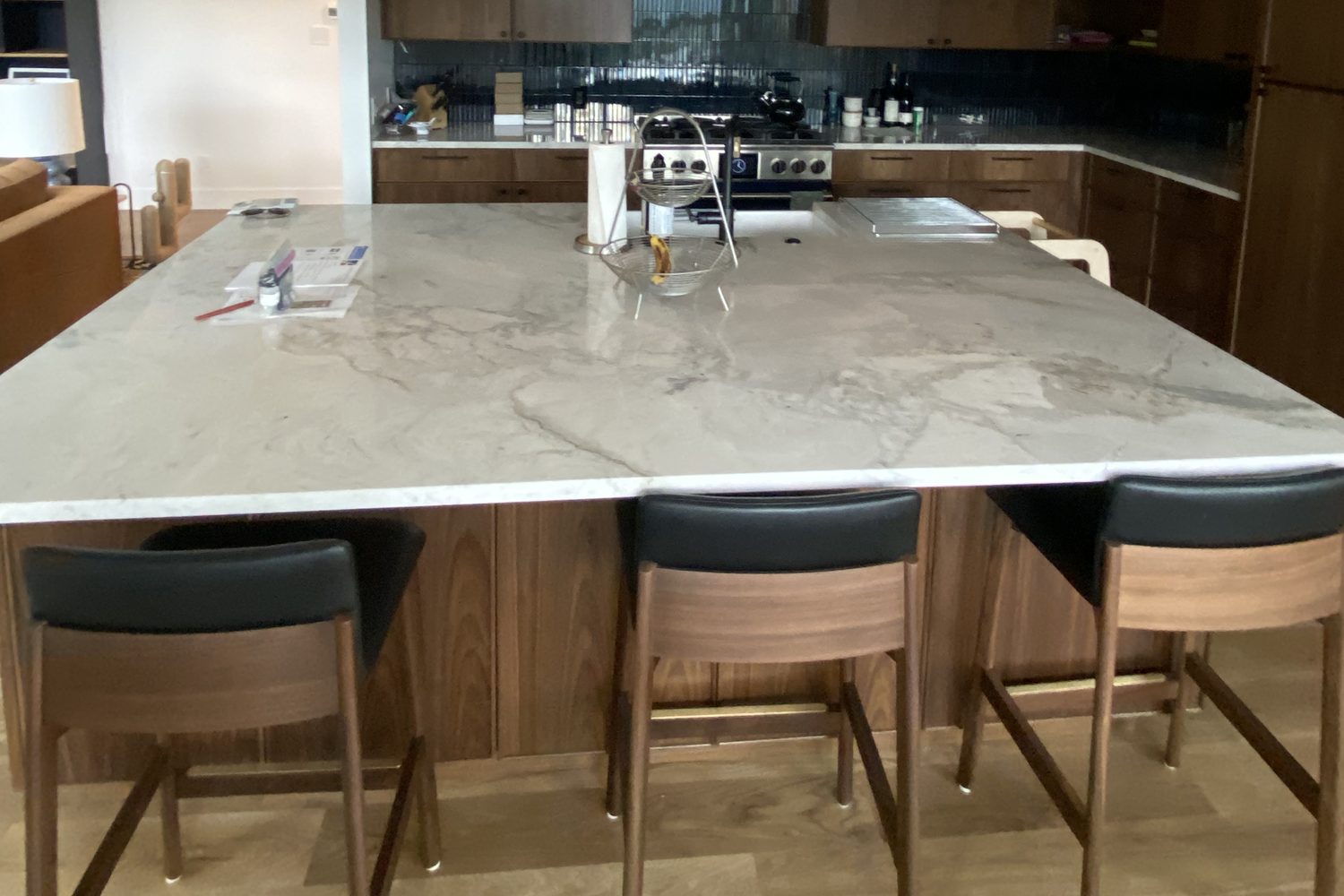
What goes under the top matters as much as the top itself in kitchen countertop installation. Thick 3 cm stone usually sits right on well built cabinets, with a span of up to about 24 inches between supports.
Thinner 2 cm stone almost always needs a full plywood subtop. Solid surface is usually bonded straight to the cabinet tops with silicone, with extra cleats where the top is not supported, like over a dishwasher. Overhangs at islands and bar seating need plywood, brackets, or corbels underneath.
The Downsides of Laminate
Laminate is the budget choice in kitchen countertop installation, and it has a few weak spots to know about. Hot pans can scorch or blister it, and knives cut right through the surface layer.
Water can get into seams and swell the particleboard core underneath. Undermount sinks are hard to use with standard laminate, and chips are hard to repair. Laminate also offers fewer edge styles than stone and usually needs replacing sooner.
What Installation Costs
The labor part of kitchen countertop installation usually makes up about 15 to 30 percent of the total. For an average kitchen, install labor runs about $450 to $900.
Removing old countertops before a kitchen countertop installation adds about $50 to $300. Sink cutouts, cooktop cutouts, and fancy edge profiles add fabrication cost. A national average kitchen with about 35 square feet of quartz lands around $3,000 total.
Before Install Day
A smooth kitchen countertop installation depends on a few things being ready. The sink, faucet, and cooktop should be on site before the template, so the fabricator cuts the right openings.
Clear the counters and the area around the kitchen, since slabs are heavy and need a clear path. Plan on the sink being out of service for a few hours during kitchen countertop installation, and on keeping the backsplash joint dry overnight.